
From 1-5 September, women’s health steps into the spotlight, as Continence Health Australia partners with Jean Hailes to support all women to make informed decisions about our health.
Don’t miss the amazing webinar “Say Yes to Pelvic Floor” on Thursday 4 September, then check out our resources, stories, and podcasts – we’ve even got a bladder control self-assessment questionnaire.
While you’re here, why not take a wander around the rest of our website? You’ll find information, resources…and a sisterhood the goes against the flow!
Free webinar: Say yes to your pelvic floor
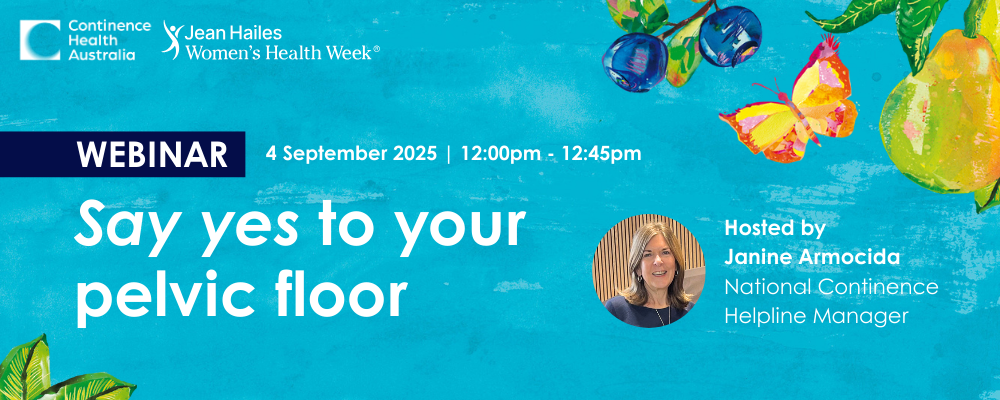
Continence Health Australia are pleased to offer a free lunchtime webinar, ‘Say yes to your pelvic floor’.
Thursday 4 September, 12.00 – 12.45pm AEST
Say yes to you, and join us during Women’s Health Week as Janine Armocida (Manager of the National Continence Helpline) speaks with Dr Jodie Dakic (physiotherapist) and Kimberley Smith (elite netballer and mother of three), to discuss:
- how a healthy pelvic floor can support your continence health
- healthy pelvic floor function for women
- why seeking treatment early is a good idea (hint, you only get one body)
- the National Continence Helpline (1800 33 00 66), a free telephone service that offers confidential information, advice and support to anyone living in Australia.
Say yes to your pelvic floor is proudly hosted by the Continence Health Australia, the lead body promoting bladder and bowel control health. We warmly welcome attendees to submit a question in the registration form below for the webinar’s moderated Q&A session.
Do a friend a favour and invite them along!
The viewpoints of the presenters in this webinar are reflections of their own personal experience and/or professional expertise. The information provided is general in nature, the Continence Health Australia recommends you consult your medical professional or healthcare provider if you require medical advice or treatment.
Presenters

Janine Armocida is the National Continence Helpline Manager at Continence Health Australia. She and the helpline team help nearly 12,000 callers affected by incontinence with information, advice and support every year. Janine has extensive experience as a Nurse Continence Specialist and has a special interest in women’s and children’s continence health.

Kimberley Smith is a former corporate lawyer, elite netballer with the NSW Swifts and the Australian Diamonds squad and mum of three. In 2020, Kimberley co-founded the Empowered Motherhood Program with physiotherapist Lyz Evans after her own birth trauma. This expert-led online platform has supported over 10,000 Australian mothers with evidence-based education and exercise. Kimberley will share her story of pelvic floor health.

Dr. Jodie Dakic is a physiotherapist and Senior Lecturer at Monash University, with extensive experience in pelvic floor and sports physiotherapy. Her research focuses on pelvic health for active women. She’s passionate about improving female health in sport and is an invited member of the Australian Institute of Sports Female Performance Health Initiative and Women’s Tennis Association Women’s Health Taskforce.

Know your body
Your core – it’s more than just tummy muscles
Bladder leakage: not just a ‘senior’s problem’
The truth about farts, constipation and why you pee when you sneeze
Courageous Conversations
It’s time to talk about ‘below the belt health’
Rhiannon’s Story -Prioritise the things you love
10 body and sex facts that will change your life forever!
End the shame and stigma
Should I lift and squeeze or see a Health Pro?
Nine ways to reverse exhaustion
Christin’s story – incontinence isn’t just a senior’s problem (podcast)
Trust your gut!
Incontinence Prevention – it’s all about healthy habits!
Boost your mood with these mind nourishing foods
iWorkout: the pelvic floor exercise routine you can start today

Bladder control: Self-assessment questionnaire
- Do you sometimes feel you have not completely emptied your bladder?
- Do you have to rush to use the toilet?
- Do you wake up twice or more during the night to go to the toilet?
- Do you leak before you get to the toilet?
- Do you plan your daily routine around where the nearest toilet is?
- Do you leak when you laugh or sneeze?
- Do you leak when you lift something heavy?
- Do you leak when you exercise?
- Do you leak when you change from a seated or lying position to a standing position?
If you answered ‘yes’ to any of these questions, talk to a health professional. There is help available, call the National Continence Helpline on 1800 33 00 66.

